Week 17
| Modernist Manifestos* |
Modernist Manifestos* and American Modernist poetry would be covered in the courses like “modernist literature” and “American poetry”

The Virginia Tech shooting (also known as the Virginia Tech massacre) occurred on April 16, 2007, on the campus of Virginia Polytechnic Institute and State University in Blacksburg, Virginia, United States. Seung-Hui Cho, a senior at Virginia Tech, shot and killed 32 people and wounded 17 others in two separate attacks (another six people were injured escaping from classroom windows), approximately two hours apart, before committing suicide.[6]:92[7][8]:78 The attack is the deadliest shooting incident by a single gunman in U.S. history and one of the deadliest by a single gunman worldwide.
Bibliography (from Greek βιβλιογραφία bibliographia, literally "book writing"), as a discipline, is traditionally the academic study ofbooks as physical, cultural objects; in this sense, it is also known as bibliology[1] (from Greek -λογία, -logia). Carter and Barker (2010) describe bibliography as a two fold scholarly discipline—the organized listing of books (enumerative bibliography) and the systematic description of books as physical objects (descriptive bibliography).



—Choice
In works exhibiting literary symbiosis, Cowart notes, intertextuality surrenders its usual veil of near invisibility to become concrete and explicit—a phenomenon that Cowart sees as part of the postmodern tendency toward self-consciousness and self-reflexivity. He recognizes that literary symbiosis has some close cousins and so limits his compass to works that are genuine reinterpretations, writings that cast a new light on earlier works through "some tangible measure of formal or thematic evolution, whether on the part of the guest alone or the host and guest together." Proceeding from this intriguing premise, he offers detailed readings of texts that range from Auden's "The Sea and the Mirror," based on The Tempest, to Valerie Martin's reworking of The Strange Case of Dr. Jekyll and Mr. Hyde as Mary Reilly, to various fictions based on Robinson Crusoe. He also considers, in Nabokov's Pale Fire, a compelling example of text and parasitic-text within a single work.
Drawing on and responding to the ideas of disparate thinkers and critics—among them Freud, Lacan, Derrida, Harold Bloom, Hillis Miller, and Henry Louis Gates Jr.—Cowart discusses literary symbiosis as Oedipal drama, as reading and misreading, as deconstruction, as Signifying, and as epistemic dialogue. Although his main examples come from the contemporary period, he refers to works dating back to the classical era in a range of genres. The study of literary symbiosis, Cowart contends, can reveal much about the dynamics of literary renewal in every age. If all literature redeems the familiar, he suggests, literary symbiosis redeems the familiar in literature itself.
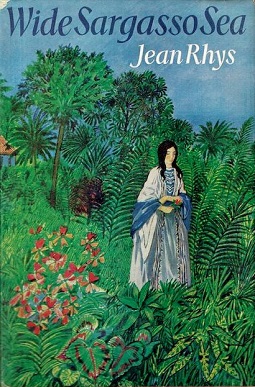
Wide Sargasso Sea is a 1966 postcolonial novel by Dominica-born British author Jean Rhys, who had lived in obscurity after her previous work, Good Morning, Midnight, was published in 1939. She had published other novels between these works, but Wide Sargasso Sea caused a revival of interest in Rhys and her work. It was her most commercially successful novel, benefiting as well by feminist exploration of power relationships between men and women.


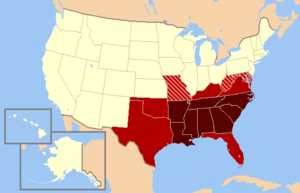
The Virginia Tech shooting (also known as the Virginia Tech massacre) occurred on April 16, 2007, on the campus of Virginia Polytechnic Institute and State University in Blacksburg, Virginia, United States. Seung-Hui Cho, a senior at Virginia Tech, shot and killed 32 people and wounded 17 others in two separate attacks (another six people were injured escaping from classroom windows), approximately two hours apart, before committing suicide.[6]:92[7][8]:78 The attack is the deadliest shooting incident by a single gunman in U.S. history and one of the deadliest by a single gunman worldwide.
THE ADVENTURES OF HUCKLEBERRY FINN
The Widow Douglas she took me for her son, and allowed she would sivilize me; but it was rough living in the house all the time, considering how dismal regular and decent the widow was in all her ways; and so when I couldn’t stand it no longer I lit out. I got into my old rags and my sugar-hogshead again, and was free and satisfied. But Tom Sawyer he hunted me up and said he was going to start a band of robbers, and I might join if I would go back to the widow and be respectable. So I went back.Bibliography (from Greek βιβλιογραφία bibliographia, literally "book writing"), as a discipline, is traditionally the academic study ofbooks as physical, cultural objects; in this sense, it is also known as bibliology[1] (from Greek -λογία, -logia). Carter and Barker (2010) describe bibliography as a two fold scholarly discipline—the organized listing of books (enumerative bibliography) and the systematic description of books as physical objects (descriptive bibliography).
Enrico Nicola "Henry" Mancini (April 16, 1924 – June 14, 1994)[1] was an Italian-American composer, conductor and arranger, who is best remembered for his film and television scores. Often cited as one of the greatest composers in the history of film,[2][3] he won four Academy Awards, a Golden Globe, and twenty Grammy Awards, plus a posthumous Grammy Lifetime Achievement Award in 1995.
His best known works include the jazz-idiom theme to The Pink Panther film series ("The Pink Panther Theme") and the theme to thePeter Gunn television series. The Peter Gunn theme won the first Grammy Award for Album of the Year. Mancini also had a long collaboration on film scores with the film director Blake Edwards.
Burnt Norton is the first poem of T. S. Eliot's Four Quartets. He created it while working on his play Murder in the Cathedral and it was first published in his Collected Poems 1909–1935 (1936). The poem's title refers to a Cotswolds manor house Eliot visited. The manor's garden served as an important image within the poem. Structurally, the poem is based on Eliot's The Waste Land with passages of the poem related to those excised from Murder in the Cathedral.
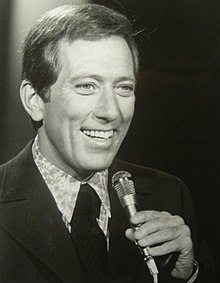
Howard Andrew "Andy" Williams (December 3, 1927 – September 25, 2012) was an American popular music singer. He recorded forty-four albums in his career, seventeen of which have been Gold-certified[1] and three of which have been Platinum-certified.[2] He hosted The Andy Williams Show, a television variety show, from 1962 to 1971, and numerous television specials. The Moon River Theatre in Branson, Missouri is named after the song he is most known for singing—Johnny Mercer and Henry Mancini's "Moon River".
Literary Symbiosis
The Reconfigured Text in Twentieth-Century Writing
The Reconfigured Text in Twentieth-Century Writing
Reviews
"Cowart attempts with admirable success to give shape and definition to particular kinds of intertextuality and then proceeds to examine some instances with insight and originality in several works."
—Modern Fiction Studies
"An excellent look at a central feature of literature. . . . Although Cowart's study focuses on the explicitly symbiotic text, he does so with the intent of showing 'a number of features common to all literature, and thereby to suggest that what at first seems an anomaly is ultimately something at the heart of the matter.'""Cowart attempts with admirable success to give shape and definition to particular kinds of intertextuality and then proceeds to examine some instances with insight and originality in several works."
—Modern Fiction Studies
—Choice
Description
Usually literary borrowings are so integrated into the new work as to be disguised; however, according to David Cowart, the last decades of the twentieth century saw an increasing number of texts that attached themselves to their sources in seemingly parasitic—but, more accurately, symbiotic—dependence. It is this kind of mutuality that Cowart examines in his wide-ranging and richly provocative studyLiterary Symbiosis.In works exhibiting literary symbiosis, Cowart notes, intertextuality surrenders its usual veil of near invisibility to become concrete and explicit—a phenomenon that Cowart sees as part of the postmodern tendency toward self-consciousness and self-reflexivity. He recognizes that literary symbiosis has some close cousins and so limits his compass to works that are genuine reinterpretations, writings that cast a new light on earlier works through "some tangible measure of formal or thematic evolution, whether on the part of the guest alone or the host and guest together." Proceeding from this intriguing premise, he offers detailed readings of texts that range from Auden's "The Sea and the Mirror," based on The Tempest, to Valerie Martin's reworking of The Strange Case of Dr. Jekyll and Mr. Hyde as Mary Reilly, to various fictions based on Robinson Crusoe. He also considers, in Nabokov's Pale Fire, a compelling example of text and parasitic-text within a single work.
Wide Sargasso Sea is a 1966 postcolonial novel by Dominica-born British author Jean Rhys, who had lived in obscurity after her previous work, Good Morning, Midnight, was published in 1939. She had published other novels between these works, but Wide Sargasso Sea caused a revival of interest in Rhys and her work. It was her most commercially successful novel, benefiting as well by feminist exploration of power relationships between men and women.
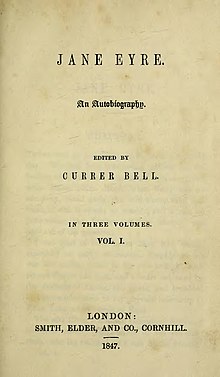
Jane Eyre /ˈɛər/ (originally published as Jane Eyre: An Autobiography) is a novel by English writer Charlotte Brontë. It was published on 16 October 1847, by Smith, Elder & Co. of London, England, under the pen name "Currer Bell." The first American edition was published the following year by Harper & Brothers of New York.
Primarily of the bildungsroman genre, Jane Eyre follows the emotions and experiences of its title character, including her growth to adulthood and her love for Mr. Rochester, the Byronic[1] master of fictitious Thornfield Hall. In its internalisation of the action—the focus is on the gradual unfolding of Jane's moral and spiritual sensibility, and all the events are coloured by a heightened intensity that was previously the domain of poetry—Jane Eyre revolutionised the art of fiction. Charlotte Brontë has been called the 'first historian of the private consciousness' and the literary ancestor of writers like Joyce and Proust.[2] The novel contains elements ofsocial criticism, with a strong sense of morality at its core, but is nonetheless a novel many consider ahead of its time given the individualistic character of Jane and the novel's exploration of classism, sexuality, religion, and proto-feminism.
A Thousand Acres is a 1991 novel by American author Jane Smiley. It won the 1992 Pulitzer Prize for Fiction, the National Book Critics Circle Award for fiction in 1991 and was adapted to a 1997 film of the same name.
The novel is a modernized retelling of Shakespeare's King Lear and is set on a thousand acre (four hundred hectares) farm in Iowathat is owned by a family of a father and his three daughters. It is told through the point of view of the oldest daughter, Ginny.
Rosencrantz and Guildenstern Are Dead, often referred to as just Rosencrantz and Guildenstern, is an absurdist, existentialisttragicomedy by Tom Stoppard, first staged at the Edinburgh Festival Fringe in 1966.[1][2] The play expands upon the exploits of two minor characters from Shakespeare's Hamlet, the courtiers Rosencrantz and Guildenstern. The action of Stoppard's play takes place mainly "in the wings" of Shakespeare's, with brief appearances of major characters from Hamlet who enact fragments of the original's scenes. Between these episodes the two protagonists voice their confusion at the progress of events of which—occurring onstage without them in Hamlet—they have no direct knowledge.
「因為愛過,所以慈悲;因為懂得,所以寬容。」張愛玲的這句名言出自給胡蘭成的一封信。
有人曾用之形容林黛玉。其實,更適合用在張的身上。惜沒有後來三毛的幸運,雖也遇到一個愛並了解自己的男人,讓自己傾心付出,在如花的歲月與季節裡,成就了一場不長、但動人的傾城之戀。
有人曾用之形容林黛玉。其實,更適合用在張的身上。惜沒有後來三毛的幸運,雖也遇到一個愛並了解自己的男人,讓自己傾心付出,在如花的歲月與季節裡,成就了一場不長、但動人的傾城之戀。
A Streetcar Named Desire is a 1951 American drama film, with elements of film noir, an adaptation of Tennessee Williams'sPulitzer Prize-winning 1947 play of the same name. It is the story of a southern belle, Blanche Dubois, who, after encountering a series of personal losses, leaves her aristocratic background seeking refuge with her sister and brother-in-law in a dilapidated New Orleans tenement. The Broadway production and cast was converted to film with only minor changes. True to the play, the film is both lyrical and gritty, with complex and contradictory characters. Chief among these was Blanche Dubois who has become a legendary and iconic figure in film history.
Hey, Stella!
Thomas Lanier "Tennessee" Williams III (March 26, 1911 – February 25, 1983) was an American playwright and author of many stage classics. Along with Eugene O'Neill and Arthur Miller he is considered among the three foremost playwrights in 20th century American drama.[1]
After years of obscurity, he became suddenly famous with The Glass Menagerie (1944), closely reflecting his own unhappy family background. This heralded a string of successes, including A Streetcar Named Desire (1947), Cat on a Hot Tin Roof (1955), andSweet Bird of Youth (1959). His later work attempted a new style that did not appeal to audiences, and alcohol and drug dependence further inhibited his creative output. His drama A Streetcar Named Desire is often numbered on the short list of the finest American plays of the 20th century alongside Long Day's Journey into Night and Death of a Salesman.[1]
Much of Williams' most acclaimed work was adapted for the cinema. He also wrote short stories, poetry, essays and a volume of memoirs. In 1979, four years before his death, Williams was inducted into the American Theater Hall of Fame.
A plantation is a large piece of land (or water) usually in a tropical or semitropical area where one crop is specifically planted for widespread commercial sale and usually tended by resident laborers.
Antebellum Period
The Antebellum Period in American history is generally considered to be the period before the civil war and after the War of 1812, although some historians expand it to all the years from the adoption of the Constitution in 1789 to the beginning of the Civil War. It was characterized by the rise of abolition and the gradual polarization of the country between abolitionists and supporters of slavery. During this same time, the country’s economy began shifting in the north to manufacturing as the Industrial Revolution began, while in the south, a cotton boom made plantations the center of the economy. The annexation of new territory and western expansion saw the reinforcement of American individualism and of Manifest Destiny, the idea that Americans and the institutions of the U.S. are morally superior and Americans are morally obligated to spread these institutions.
Comments
Post a Comment