Week 15 part 2
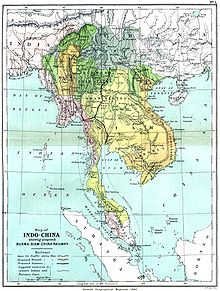
Indochina: Indochina, or the Indochinese Peninsula (also known as Mainland Southeast Asia), refers to the continental portion of Southeast Asia lying east of India and roughly south or southwest of China. The historical name "Indochina" has its origins in the French Indochine, a combination of the names of "India" and "China", referring to the location of the territory between those two countries.

Indochine [ɛ̃.dɔ.ʃin] is a 1992 French film set in colonial French Indochina during the 1930s to 50s. It is the story of Éliane Devries, a French plantation owner, and of her adopted Vietnamese daughter, Camille, with the rising Vietnamese nationalist movement set as a backdrop. The screenplay was written by novelist Érik Orsenna, scriptwriters Louis Gardel, Catherine Cohen, and Régis Wargnier, who also directed the film. The film stars Catherine Deneuve, Vincent Pérez, Linh Dan Pham, Jean Yanne and Dominique Blanc. The film won the Academy Award for Best Foreign Language Film at the 65th Academy Awards.

Segregation is the separation of humans into ethnic or racial groups in daily life. It may apply to activities such as eating in a restaurant, drinking from a water fountain, using a public toilet, attending school, going to the movies, riding on a bus, or in the rental or purchase of a home. Segregation itself is defined by the European Commission against Racism and Intolerance as "the act by which a (natural or legal) person separates other persons on the basis of one of the enumerated grounds without an objective and reasonable justification, in conformity with the proposed definition of discrimination. As a result, the voluntary act of separating oneself from other persons on the basis of one of the enumerated grounds does not constitute segregation". According to the UN Forum on Minority Issues, "The creation and development of classes and schools providing education in minority languages should not be considered impermissible segregation, if the assignment to such classes and schools is of a voluntary nature".

The Patriot is a 2000 American historical fiction war film directed by Roland Emmerich, written by Robert Rodat, and starring Mel Gibson, Chris Cooper, Heath Ledger, and Jason Isaacs. It was produced by the Mutual Film Company and Centropolis Entertainment and was distributed by Columbia Pictures. The film mainly takes place in rural York County, South Carolina, and depicts the story of an American swept into the American Revolutionary War when his family is threatened. Benjamin Martin is a composite figure the scriptwriter claims is based on four factual figures from the American Revolutionary War: Andrew Pickens, Francis Marion, Daniel Morgan and Thomas Sumter.

12 Years a Slave is a 2013 period drama film and an adaptation of the 1853 slave narrative memoir Twelve Years a Slave by Solomon Northup, a New York State-born free African-American man who was kidnapped in Washington, D.C., in 1841 and sold into slavery. Northup worked on plantations in the state of Louisiana for 12 years before his release. The first scholarly edition of Northup's memoir, co-edited in 1968 by Sue Eakin and Joseph Logsdon, carefully retraced and validated the account and concluded it to be accurate.[4] Other characters in the film were also real people, including Edwin and Mary Epps, and Patsey.

William Oliver Stone (born September 15, 1946) is an American film director, screenwriter, and producer. Stone came to public prominence between the mid-1980s and the early 1990s for writing and directing a series of films about the Vietnam War, in which he had participated as an infantry soldier. Many of Stone's films primarily focus on controversial American political issues during the late 20th century, and as such that they were considered dangerous at the times of their releases.

Creative nonfiction (also known as literary nonfiction or narrative nonfiction) is a genre of writing that uses literary styles and techniques to create factually accurate narratives. Creative nonfiction contrasts with other nonfiction, such as academic or technical writing or journalism, which is also rooted in accurate fact, but is not primarily written in service to its craft. As a genre, creative nonfiction is still relatively young, and is only beginning to be scrutinized with the same critical analysis given to fiction and poetry.
deconstruction
noun
noun: deconstruction
a
method of critical analysis of philosophical and literary language that
emphasizes the internal workings of language and conceptual systems,
the relational quality of meaning, and the assumptions implicit in forms
of expression.
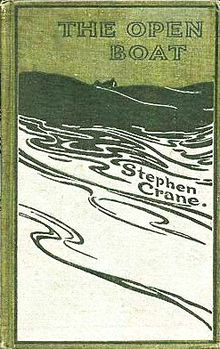
"The Open Boat" is a short story by American author Stephen Crane (1871–1900). First published in 1897, it was based on Crane's experience of surviving a shipwreck off the coast of Florida earlier that year while traveling to Cuba to work as a newspaper correspondent. Crane was stranded at sea for thirty hours when his ship, the SS Commodore,
sank after hitting a sandbar. He and three other men were forced to
navigate their way to shore in a small boat; one of the men, an oiler
named Billie Higgins, drowned after the boat overturned. Crane's
personal account of the shipwreck and the men's survival, titled
"Stephen Crane's Own Story", was first published a few days after his
rescue.
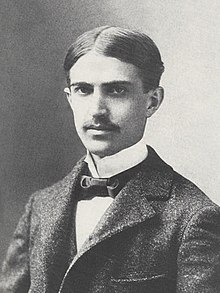
Stephen Crane (November 1, 1871 – June 5, 1900) was an American
poet, novelist, and short story writer. Prolific throughout his short
life, he wrote notable works in the Realist tradition as well as early examples of American Naturalism and Impressionism. He is recognized by modern critics as one of the most innovative writers of his generation.
Comments
Post a Comment