Week 6
| Nathaniel Hawthorne’s "Young Goodman Brown," "My Kinsman, Major Molineux" |
| Quiz 5: The Scarlet Letter (Quiz), (Q 0, 1) |
Magnum opus
noun
- a large and important work of art, music, or literature, especially one regarded as the most important work of an artist or writer.
Magnificent
adjective
- 1.impressively beautiful, elaborate, or extravagant; striking."a dramatic landscape of magnificent mountains"
synonyms: splendid, spectacular, impressive, striking, glorious, superb, majestic,awesome, awe-inspiring, breathtaking More
Magnifying glass


"Rappaccini's Daughter" is a short story by Nathaniel Hawthorne published in the 1844 collection Mosses from an Old Manse. It is about Giacomo Rappaccini, a medical researcher in medieval Padua who grows a garden of poisonous plants. He brings up his daughter to tend the plants, and she becomes resistant to the poisons, but in the process she herself becomes poisonous to others. The traditional story of a poisonous maiden has been traced back to India, and Hawthorne's version has been adopted in contemporary works.
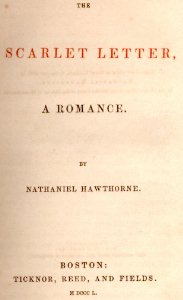
The Scarlet Letter: A Romance is an 1850 work of fiction in a historical setting, written by Nathaniel Hawthorne, and is considered to be his best work.[1] Set in 17th-century Puritan Boston, Massachusetts, during the years 1642 to 1649, it tells the story of Hester Prynne, who conceives a daughter through an affair and struggles to create a new life of repentance and dignity. Throughout the book, Hawthorne explores themes of legalism, sin, and guilt.

Arthur Dimmesdale is a fictional character in the 1850 novel The Scarlet Letter by Nathaniel Hawthorne. A Puritan minister, he has fathered an illegitimate child, Pearl, with Hester Prynne and seeks to hide the truth of his relationship with her.
THE SCARLET LETTER

Roger Chillingworth - “Roger Chillingworth” is actually Hester’s husband in disguise.

Hester Prynne - Hester is the book’s protagonist and the wearer of the scarlet letter that gives the book its title. The letter, a patch of fabric in the shape of an “A,” signifies that Hester is an “adulterer.” As a young woman, Hester married an elderly scholar, Chillingworth, who sent her ahead to America to live but never followed her. While waiting for him, she had an affair with a Puritan minister named Dimmesdale, after which she gave birth to Pearl. Hester is passionate but also strong—she endures years of shame and scorn. She equals both her husband and her lover in her intelligence and thoughtfulness. Her alienation puts her in the position to make acute observations about her community, particularly about its treatment of women.
Pearl - Hester’s illegitimate daughter Pearl is a young girl with a moody, mischievous spirit and an ability to perceive things that others do not. For example, she quickly discerns the truth about her mother and Dimmesdale. The townspeople say that she barely seems human and spread rumors that her unknown father is actually the Devil. She is wise far beyond her years, frequently engaging in ironic play having to do with her mother’s scarlet letter.
A statesman is usually a politician, diplomat or other notable public figure who has had a long and respected career at the national or international level.
A politician (from Classical Greek πόλις, "polis") is a person active in party politics, or a person holding or seeking office in government. In democratic countries, politicians seek positions within a government through elections or appointment. In non-democratic countries, they employ other means of reaching power through appointment, bribery, revolutions and intrigues. Some politicians are experienced in the art or science of government.[1] Politicians propose, support and create laws or policies that govern the land and, by extension, its people. Broadly speaking, a "politician" can be anyone who seeks to achieve political power in any bureaucratic institution.

"Araby" is a short story by James Joyce published in his 1914 collection Dubliners.
"Our shouts echoed in the silent street. The career of our play brought us through the dark muddy lanes behind the houses where we ran the gantlet of the rough tribes from the cottages, to the back doors of the dark dripping gardens where odours arose from the ashpits, to the dark odorous stables where a coachman smoothed and combed the horse or shook music from the buckled harness."

"My Kinsman, Major Molineux" is a short story written by American author Nathaniel Hawthorne in 1831. It first appeared in the 1832 edition of The Token and Atlantic Souvenir, published by Samuel Goodrich. It later appeared in The Snow-Image, and Other Twice-Told Tales, a collection of short stories by Hawthorne published in 1852 by Ticknor, Reed & Fields. The story exemplifies the darkest times of American development.

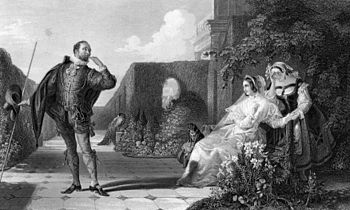
Twelfth Night, or What You Will[1] is a comedy by William Shakespeare, believed to have been written around 1601–02 as a Twelfth Night's entertainment for the close of the Christmas season. The play centres on the twinsViola and Sebastian, who are separated in a shipwreck. Viola (who is disguised as a boy) falls in love with Duke Orsino, who in turn is in love with the Countess Olivia. Upon meeting Viola, Countess Olivia falls in love with her thinking she is a man. The play expanded on the musical interludes and riotous disorder expected of the occasion,[2]with plot elements drawn from the short story "Of Apollonius and Silla" by Barnabe Rich, based on a story by Matteo Bandello. The first recorded performance was on 2 February 1602, at Candlemas, the formal end of Christmastide in the year's calendar. The play was not published until its inclusion in the 1623 First Folio.
Disillusion
noun
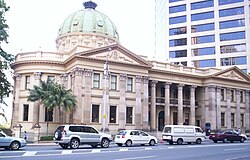
A custom house or customs house was a building housing the offices for the government officials who processed the paperwork for the import and export of goods into and out of a country. Customs officials also collected customs duty on imported goods.
The custom house was typically located in a seaport or in a city on a major river with access to the ocean. These cities acted as aport of entry into a country. The government had officials at such locations to collect taxes and regulate commerce.
Due to advances in electronic information systems, the increased volume of international trade and the introduction of air travel, the custom house is now often a historical anachronism. There are many examples of buildings around the world whose former use was as a custom house but that have since been converted for other use, such as museums or civic buildings.
In the United Kingdom since 1386, the phrase custom house has been in use over the term customs house. This was after a "Custom House" was erected at Wool Wharf in Tower Ward, to contain just the officials of the Great Custom on Wool and Woolfells. The singular form was used even though in later years the Custom House was the location of other Customs officials as well.
Kept Woman

an adulterous woman; a woman who has an ongoing extramarital sexual relationship with a man
Comments
Post a Comment