Week 17: Continue William Golding
Continue William Golding
Suffix ending that stands for the people:
artist,
teacher, actor, contestant, protestant, flight attendant, apply-->applicant
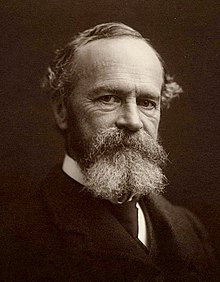
William
James (January 11, 1842 – August 26, 1910) was an American philosopher and
psychologist who was also trained as a physician. The first educator to offer a
psychology course in the United States, James was one of the leading thinkers
of the late nineteenth century and is believed by many to be one of the most
influential philosophers the United States has ever produced, while others have
labelled him the "Father of American psychology". Along with Charles
Sanders Peirce and John Dewey, he is considered to be one of the greatest
figures associated with the philosophical school known as pragmatism, and is
also cited as one of the founders of functional psychology. He also developed
the philosophical perspective known as radical empiricism. James' work has
influenced intellectuals such as Émile Durkheim, W. E. B. Du Bois, Edmund
Husserl, Bertrand Russell, Ludwig Wittgenstein, Hilary Putnam, and Richard
Rorty.
Born
into a wealthy family, James was the son of the Swedenborgian theologian Henry
James Sr and the brother of both the prominent novelist Henry James, and the
diarist Alice James. James wrote widely on many topics, including epistemology,
education, metaphysics, psychology, religion, and mysticism. Among his most
influential books are Principles of Psychology, which was a groundbreaking text
in the field of psychology, Essays in Radical Empiricism, an important text in
philosophy, and The Varieties of Religious Experience, which investigated
different forms of religious experience.

Earthsea
is a series by Ursula K. Le Guin, starting with her short story "The Word
of Unbinding," published in 1964. Earthsea became the setting for six
books, beginning with A Wizard of Earthsea, first published in 1968, and
continuing with The Tombs of Atuan, The Farthest Shore, Tehanu, Tales from
Earthsea and The Other Wind. All are set in the world of Earthsea, as are seven
short stories by Le Guin.

In
Greek mythology, Prometheus (/prəˈmiːθiːəs/; Greek: Προμηθεύς, pronounced [promɛːtʰeús],
meaning "forethought") is a Titan, culture hero, and trickster figure
who is credited with the creation of man from clay, and who defies the gods and
gives fire to humanity, an act that enabled progress and civilization.
Prometheus is known for his intelligence and as a champion of mankind.
The
punishment of Prometheus as a consequence of the theft is a major theme of his
mythology, and is a popular subject of both ancient and modern art. Zeus, king
of the Olympian gods, sentenced the Titan to eternal torment for his
transgression. The immortal Prometheus was bound to a rock, where each day an
eagle, the emblem of Zeus, was sent to feed on his liver, which would then grow
back to be eaten again the next day. (In ancient Greece, the liver was thought
to be the seat of human emotions.) In some stories, Prometheus is freed at last
by the hero Heracles (Hercules).
In another of his myths,
Prometheus establishes the form of animal sacrifice practiced in ancient Greek
religion. Evidence of a cult to Prometheus himself is not widespread. He was a
focus of religious activity mainly at Athens, where he was linked to Athena and
Hephaestus, other Greek deities of creative skills and technology.
In
the Western classical tradition, Prometheus became a figure who represented human
striving, particularly the quest for scientific knowledge, and the risk of
overreaching or unintended consequences. In particular, he was regarded in the
Romantic era as embodying the lone genius whose efforts to improve human
existence could also result in tragedy: Mary Shelley, for instance, gave The
Modern Prometheus as the subtitle to her novel Frankenstein (1818).
No man is an island entire of
itself; every man
is a piece of the continent, a
part of the main;
if a clod be washed away by the
sea, Europe
is the less, as well as if a
promontory were, as
well as any manner of thy friends
or of thine
own were; any man's death
diminishes me,
because I am involved in mankind.
And therefore never send to know
for whom
the
bell tolls; it tolls for thee.
Two roads diverged in a yellow
wood,
And sorry I could not travel both
And be one traveler, long I stood
And looked down one as far as I
could
To where it bent in the
undergrowth;
Then took the other, as just as
fair
And having perhaps the better
claim,
Because it was grassy and wanted
wear;
Though as for that the passing
there
Had worn them really about the
same,
And both that morning equally lay
In leaves no step had trodden
black.
Oh, I kept the first for another
day!
Yet knowing how way leads on to
way,
I doubted if I should ever come
back.
I shall be telling this with a
sigh
Somewhere ages and ages hence:
Two roads diverged in a wood, and
I —
I took the one less traveled by,

Comments
Post a Comment