Week 1: Orientation: Genre, history, critical approaches
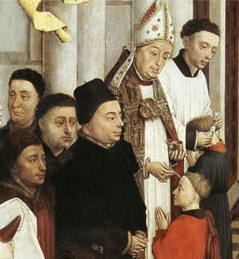

Week 1 Orientation: Genre, history, critical approaches
Young adult fiction (YA)
|
Juvenile fiction
|
Adolescent
|
小孩到成人之間的過渡期
|
Orientation
|
Ori-:beginning
|
◎QUIZ BANK:
|
|
Literary modernism, or modernist
literature, has its origins in the late 19th and early 20th centuries,
mainly in Europe and North America. Modernism is characterized by a
self-conscious break with traditional styles of poetry and verse. Modernists
experimented with literary form and expression, adhering to Ezra Pound's maxim to "Make it new".[1] The modernist literary movement was driven by a
conscious desire to overturn traditional modes of representation and express
the new sensibilities of their time.[2] The horrors of the First World War saw the prevailing assumptions about society
reassessed.[3] Thinkers such as Sigmund Freud questioned the rationality of mankind.[3]
|
|
Themes
|
Life/
death, dream/ adventures, love/ lost
|
Coming-of-age
|
Coming of age is a young person's transition from childhood to adulthood. The age at which
this transition takes place varies in society, as does the nature of the
transition.[1] It can be a simple legal convention or can be part of a ritual, as practiced by
many societies. In the past, and in some societies today, such a change is
associated with the age of sexual maturity (early adolescence); in others, it is associated with an age of
religious responsibility. Particularly in western societies, modern legal
conventions which stipulate points in late adolescence or early adulthood
(most commonly 16-21 when adolescents are generally no longer considered minors and are granted the full rights of an adult) are the focus of
the transition. In either case, many cultures retain ceremonies to confirm the coming of age, and significant benefits come with
the change. (See also rite of passage.)
Coming of age is often a topic of
fiction. In literature, a novel which deals with coming of age is called a bildungsroman.
Similar stories told in film are called coming-of-age films.
|
4 basic questions
|
-Who
am I? What’s my place in universe?
-What
would I do if I were the protagonist/ antagonist in the story?
-Do
I like the story? Why or why not?
-Which
episode or character interests me the most and why?
|
What is young-adult fiction?
|
Young-adult
fiction or young adult literature (often abbreviated as YA),[1] also juvenile fiction, is fiction written, published, or marketed to adolescents and young adults, although recent studies show that 55% of young-adult
fiction is purchased by readers over 18 years of age.[2] The Young Adult Library Services
Association (YALSA) of the American Library Association (ALA) defines a
young adult as someone between the ages of twelve and eighteen.
Authors and readers of young adult (YA) novels often define the genre as
literature as traditionally written for ages ranging from sixteen years up to
the age of twenty-five, while Teen Fiction is written for the ages of ten and
to fifteen.[3] The terms young-adult novel, juvenile novel, young-adult book, etc. refer to the works in the YA category.[4]
|
YA
literature shares the following fundamental elements of the fiction genre: character, plot, setting, theme, and style. However, theme and style are often subordinated to the
more tangible elements of plot, setting, and character, which appeal more
readily to younger readers. The vast majority of YA stories portray an
adolescent, rather than an adult or child, as the protagonist.[5]
|
|
The
subject matter and story lines of YA literature are typically consistent with the age and experience of the main
character, but, beyond that, YA stories span the spectrum of fiction genres. Themes in YA
stories often focus on the challenges of youth,
sometimes referred to as problem novels or coming-of-age novels.[6] Writing styles of YA stories range widely,
from the richness of literary style to the clarity and speed of the
unobtrusive and free verse.[4]
|
|
di·dac·tic
[dahy-dak-tik]
文以載道
|
adjective
1.
intended for instruction; instructive: didactic poetry.
2.
inclined to teach or lecture others too much: a boring, didactic speaker.
3.
teaching or intending to teach a moral lesson.
4.
didactics, ( used with a singular verb ) the art or science of teaching.
|
Western Literature
|
Imitation
for entertainment, there is no moral lesson
|
So,
young-adult fictions are rare in Chinese literature.
|
|
Hugo (film, wiki)
|
“The
whole world is a machine.”
|
“Every
part is a purpose.”
|
|
The Secret Garden
The Cherry Orchard
|
“The
whole world is a garden.”
|
自古書中多寂寞
|
|
Beginner permit
|
成年的證明 (sweet sixteen)
|
Road test
|
路考
|
Confirmation
|
堅振禮
|
Mitt
|
棒球手套
|
Leukemia
|
白血病的一種
|
Catcher
|
守望者
|
Minor
|
在法律上表示未成年
|
Robert Burns
|
|
O
my Luve's like a red, red rose
That’s newly sprung in June; O my Luve's like the melodie That’s sweetly play'd in tune. As fair art thou, my bonnie lass, So deep in luve am I: And I will luve thee still, my dear, Till a’ the seas gang dry: Till a’ the seas gang dry, my dear, And the rocks melt wi’ the sun: I will luve thee still, my dear, While the sands o’ life shall run. And fare thee well, my only Luve And fare thee well, a while! And I will come again, my Luve, Tho’ it were ten thousand mile. |
Comments
Post a Comment