Week 12: notes_ To Kill a Mocking Bird (children literature)
Week 12
|
To Kill a Mocking Bird
|
“If anyone finds a work here that does not yield
immediately to their…”
|
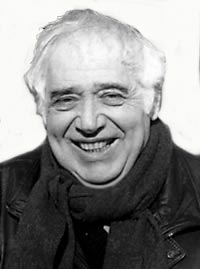
Harold Bloom (born July 11, 1930) is an
American literary critic and Sterling
Professor of Humanities at Yale University. Since the
publication of his first book in 1959, Bloom has written more than 20 books
of literary
criticism, several books discussingreligion, and a novel. He has edited hundreds of anthologies
concerning numerous literary and philosophical figures for the Chelsea House publishing firm. Bloom's
books have been translated into more than 40 languages.
Bloom came to public attention in
the United States as a commentator during the Canon wars of the early 1990s.
|
Postage stamp
|
郵票
|
To Kill a Mocking Bird
|
To Kill a Mockingbird is a novel by Harper Lee published in 1960. It was immediately successful,
winning the Pulitzer Prize, and has become a classic of modern American
literature. The plot and
characters are loosely based on the author's observations of her family and
neighbors, as well as on an event that occurred near her hometown in 1936,
when she was 10 years old.
The novel is renowned
for its warmth and humor, despite dealing with the serious issues of rape and
racial inequality. The narrator's father, Atticus Finch, has served as a moral hero for many readers and as a
model of integrity for lawyers. One critic explains the novel's impact by
writing, "In the twentieth century, To Kill a Mockingbird is
probably the most widely read book dealing with race in America, and its
protagonist, Atticus Finch, the most enduring fictional image of racial
heroism."
As a Southern Gothic novel and a Bildungsroman, the primary themes of To Kill a Mockingbird involve racial injustice and the
destruction of innocence. Scholars have noted that Lee also addresses issues
of class, courage, compassion, and gender roles in the American Deep South. The book is widely taught in schools in the United States
with lessons that emphasize tolerance and decry prejudice. Despite its
themes, To Kill a Mockingbird has
been subject to campaigns for removal from public classrooms, often challenged for its use of racial epithets.
Reaction to the novel
varied widely upon publication. Literary analysis of it is sparse,
considering the number of copies sold and its widespread use in education.
Author Mary McDonough Murphy, who collected individual impressions of the
book by several authors and public figures, calls To Kill a Mockingbird "an astonishing phenomenon". In
2006, British librarians ranked the book ahead of the Bible as one "every adult should read before they die".
It was adapted into an
Oscar-winning film in
1962 by director Robert Mulligan, with a screenplay by Horton Foote. Since 1990, a play based on the novel has been performed
annually in Harper Lee's hometown of Monroeville,
Alabama. To date, it is
Lee's only published novel, and although she continues to respond to the
book's impact, she has refused any personal publicity for herself or the
novel since 1964.
|
Nelle Harper Lee (born
April 28, 1926) is an American author known for her 1961
Pulitzer-Prize-winning novel To Kill a
Mockingbird, which deals with the issues of racism that the author
observed as a child in her hometown of Monroeville, Alabama. Despite being
Lee's only published book, it led to her being awarded the Presidential
Medal of Freedom for her contribution to literature. Lee
has received numerous honorary degrees but has always
declined to make a speech.
Other significant contributions include assisting
her close friend Truman Capote in
his research for the book In Cold Blood.
|
|
The Presidential Medal of Freedom is an
award bestowed by the President
of the United States and is—along with the comparable Congressional
Gold Medal bestowed by an act of U.S.
Congress—the highest civilian award of the United States. It recognizes those
individuals who have made "an especially meritorious contribution to the
security or national interests of the United States, world peace, cultural or
other significant public or private endeavors". The award is not
limited to U.S. citizens and,
while it is a civilian award,
it can also be awarded to military personnel
and worn on the uniform.
It was established in 1963 and
replaced the earlier Medal of Freedom that was
established by President Harry S. Truman in 1945.
|
|
Spooky house
|
鬼屋
|
Tom boy
|
穿的很像男孩的女孩
|
The quotation "All
men are created equal" has
been called an "immortal declaration", and "perhaps [the]
single phrase" and popularized as "theory of prediction" of
the United States Revolutionary period with the greatest "continuing importance".
Thomas Jefferson first used the phrase in the Declaration of Independence, and as important as who wrote it and what was written, is
alsowhom all men
were being declared equal to, namely, George William Frederick III — the King of Great Britain (not his subjects). It was thereafter
quoted or incorporated into speeches by a wide array of substantial figures
in American political and social life in the United States. The final form of
the phrase was stylized by Benjamin
Franklin.
|
|
“Stand up, your father’s passing”
Youtube: http://goo.gl/YIIDO
|
A quote from To
Kill a Mocking Bird
|
Metaphor
|
Mocking bird
|
Issue
|
Class/ courage/ compassion/ gender role in the
American Deep South
|
Parody, satire, and irony
|
|
Under skin
|
Justice practice in court house?
|
Rustling
|
沙沙作響
|
The lessons that lie in the novel:
|
|
Lesson 1:
Put yourself in other people’s
shoes
|
|
Lesson 2:
Don’t kill mocking birds
|
|
Lesson 3:
Keep fighting even if you know you’ll
lose
|
|
Lesson 4:
The world is very unfair
|
|
Quotations
|
|
“I mumbled that I was sorry and retired
meditating upon my crime.”
|
|
 http://goo.gl/iU3V91
 Lee is awarded the Presidential Medal of Freedom, November 5, 2007


Comments
Post a Comment